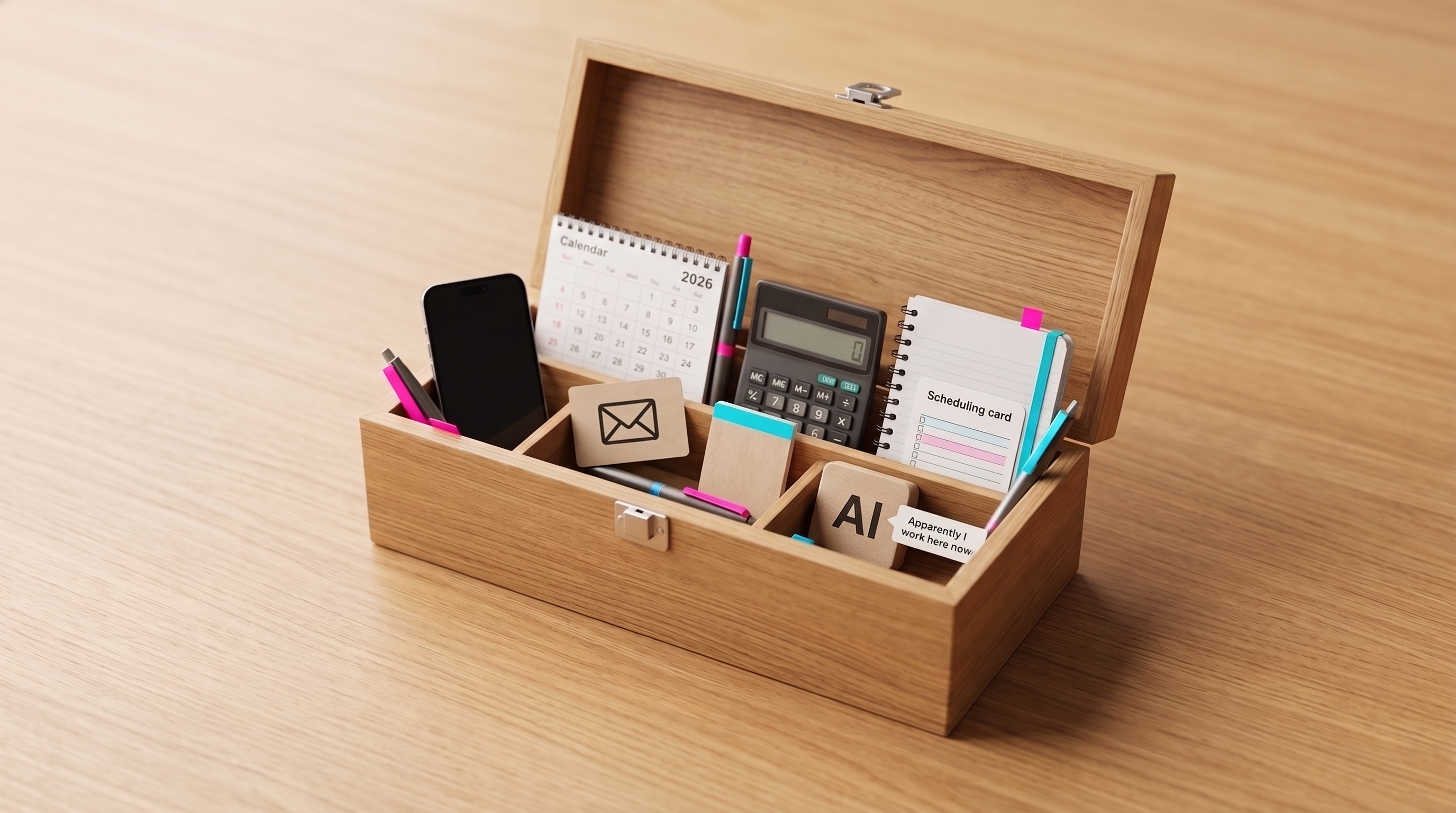
Go and look at your Google reviews. Not the star rating, the dates.
When was the last one written? If you have to scroll to find something from this year, you have a problem that doesn't show up anywhere on your dashboard. Your rating is fine. Your review count is fine. And a decent chunk of the people checking you out have already decided the information is too old to be worth much.
Reviews are the one bit of marketing most small business owners genuinely believe in. They've heard the pitch a hundred times and they agree with it. What almost nobody thinks about is that reviews expire.
The three month window
BrightLocal runs an annual survey on how people actually use reviews when they're choosing a local business. The 2026 edition surveyed just over a thousand consumers, and one number in it should make you slightly uncomfortable: 74% only care about reviews written in the last three months.
Not the last three years. Three months.
It's US data, so treat it as a direction rather than a precise reading of the New Zealand market. But the behaviour it describes is pretty universal, and if you're honest, it's exactly what you do yourself. You find a plumber, you open the reviews, you see the top one is from 2023, and something in your gut goes quiet. Not alarm exactly. Just a small withdrawal of confidence. Maybe they were great two years ago. Who's still there? Did they sell the business? Is that the same person who'd turn up?
You don't articulate any of that. You just scroll a bit further, find someone with fresher feedback, and go with them instead.
Why your review profile quietly ages
Here's how it usually goes for a small service business.
You launch, or you have a good run, or someone reminds you that reviews matter. You put in a burst of effort. You ask ten or fifteen clients over a few weeks, most of them say yes, and suddenly you have a solid page of five stars. It feels finished. You tick it off.
Then you go back to doing the actual work, because that's the job. Nobody sends a reminder that your reviews are ageing. There's no notification, no red flag, no drop in your rating. The profile you built looks exactly as good as it did the day you built it. It just gets steadily less persuasive to the people reading it, at a rate you cannot see.
Six months on, you'd still describe yourself as a business with great reviews. And you'd be right about the reviews. You'd be wrong about what they're doing for you.
The same survey found that 47% of consumers won't use a business with fewer than 20 reviews, and that expectations on star ratings have climbed sharply in a single year. So the bar keeps moving while your profile stands still. A review profile that was comfortably above average two years ago can be sitting at the edge of acceptable now without a single thing about it changing.
The bit that makes this fixable
Now the good news, and it's better than most people expect.
People will leave you a review. They just need to be asked. In that same survey, 78% of consumers had been asked to leave feedback for a business in the past year, and 83% of the people who were asked went ahead and wrote one.
That's a genuinely high conversion rate for a marketing activity that costs nothing. Compare it to your open rate on an email campaign, or the response to a social post, and asking for reviews starts to look like the least glamorous, highest-yielding thing you could be doing.
So the constraint isn't willingness. Your clients aren't reluctant. The constraint is entirely on your side, and it's specific: asking is a small task that has to happen at exactly the right moment, over and over, forever, by a person who is usually busy doing something else at that moment.
That's the actual problem. Not motivation, not strategy. Timing plus repetition.
Why the ask keeps not happening
Think about when a review request should go out. Ideally not long after the appointment, while the person still feels good about it and the details are fresh.
Now think about what you're doing at that exact point in the day. You've just finished with one client and you're greeting the next. Or you're packing up, driving to the next job, answering the three messages that came in while you were working. Or it's 6pm and you're finally sitting down.
The window where the ask would work best is the window where you have the least capacity to do it. That's not a discipline failure. It's a structural one. Any task that depends on a busy person remembering to do a small thing at a precise moment will happen sometimes, then less often, then not at all.
Which is why the businesses with consistently fresh reviews are almost never the ones with better willpower. They're the ones where the ask stopped depending on a human deciding to do it.
What "always on" actually looks like
The fix is unglamorous. Every completed appointment triggers a request. It goes out within a sensible window, it's short, and it makes leaving the review a two tap job rather than a small errand.
Nobody decides to send it. Nobody remembers to send it. It just goes, the same way every time, whether you're flat out or on holiday.
Do that and the maths changes completely. Instead of a burst of reviews once a year, you get a slow steady drip that never stops. Your most recent review is always recent, because there's always another one arriving behind it. The three month window stops being a threat and becomes something you clear without thinking about it.
The other half of this is responding. The survey found that 19% of consumers now expect a business to reply to their review on the same day it's posted, up from 6% the year before, and that generic copy paste replies actively put people off. So the response matters, and the speed of it matters, and it also has to sound like a person. That's another small recurring task landing on someone who is already at capacity, and it fails for the same reasons the ask does.
Where Doris fits
This is one of the jobs Doris is built for. She sends the review request after the appointment, without anyone triggering it, and she handles the reply when a review comes in so it doesn't sit there unanswered for a fortnight.
It's not a dramatic feature. There's no dashboard you'll enjoy looking at. It's the kind of thing you notice mostly by its absence, in the form of a review profile that quietly stopped growing eighteen months ago.
Start with the dates
Before you change anything, just go and look.
Open your Google Business Profile and check the date on your most recent review. Then count how many landed in the last three months. Then, if you're feeling brave, count how many of your last twenty clients you actually asked.
That third number is usually the one that stings, and it's also the one that's completely within your control. Most small businesses aren't sitting on a reputation problem. They're sitting on a good reputation that nobody has topped up in a while, and a queue of perfectly willing clients who were never asked.
The asking is the whole thing. It just can't keep depending on you remembering.
If your reviews have gone quiet and you'd rather not add another recurring task to your week, book a free 15-minute demo and see how Doris handles the asking and the replying while you get on with the work.
Ready to let Doris handle your front desk?
She answers calls, replies to messages, captures enquiries and follows up automatically.