We all say we care about customer experience.
Then we leave someone waiting for six hours. Miss three calls in a row. Reply with "Hey! Sorry for the delay 😊" like that somehow reverses time.
Here's the uncomfortable truth: consistency is one of the most personal things a business can offer. Not personal like handwritten notes and remembering their dog's name (although, love that for you). Personal like I can rely on you.
People don't experience reliability as a feature. They experience it as care.
Why consistency feels personal — even when you didn't mean it to
When someone reaches out to your business, they're making a small emotional handover.
They might be stressed. In a hurry. Slightly embarrassed they've put this off. Or quietly hoping you'll make it easy. So when you respond quickly, clearly, and predictably, what they feel is:
That's not good communication. That's relief.
And when you don't respond — or respond inconsistently — what they feel is something else entirely. Did I do something wrong? Are they disorganised, or just not that interested? If this is how it starts, imagine what it'll be like when there's a problem.
Not logic. Emotion.
Consistency feels personal because people use your responsiveness as a proxy for how you'll treat them throughout the whole relationship.
The myth: "We're just busy"
Busy is normal. Busy is not the problem.
Unpredictable is the problem.
If your business sometimes replies in two minutes and sometimes in two days, customers don't think "ah yes, natural workload fluctuations." They think: risky.
From the outside, inconsistency looks like disorganisation, overwhelm, or — worst of all — a business that might ghost them mid-job. And it's not even that people need you to be fast all the time. They need you to be clear.
If you can't get back to someone today, fine. But tell them. Automatically. Every time. That's the bar — and most small businesses trip over it.
Reliability beats charm. Every time.
There's a weird bias we all carry: we overvalue nice and undervalue dependable.
You know the type — bubbly, friendly, "no worries!" — but they disappear for days, forget details, make you chase, and always have a reason. Then there's the other kind: not overly chatty, not trying to be your best mate, but they answer, follow up, and do what they said they'd do.
One is charming. One is trustworthy.
Trust wins. Not because customers are cold robots, but because they're humans with limited patience and a pretty accurate sense of when they're being treated like an afterthought.
What missed calls are actually costing you
Most people think the cost of a missed call is "that one customer didn't get through."
No. The cost is the story it creates.
A missed call becomes: They're hard to reach. They must be flat out — so where do I fit in? I'll try someone else. And the brutal part? They don't announce it. They don't email to say your admin systems are giving them the ick. They just vanish. Quietly. Politely. Efficiently.
Which is why it can feel like you're doing fine — until you suddenly aren't.
Consistency isn't a personality trait. It's a design problem.
If your business relies on you or your admin being "on it" all day, every day, you're not running a system. You're running a gamble.
A system means:
That's what customers experience as professional. Not a fancy logo. Not a perfect Instagram grid. Predictable handling.
The AI comparison people get wrong
When people think about AI in customer communications, they compare it to a human receptionist on their best day. That's not the right comparison.
The real comparison is voicemail. Missed calls. "Hey sorry, just saw this." Enquiries scattered across three platforms. The dreaded "did you email us?" loop.
The question isn't: Is AI as warm as my best staff member?
The question is: Is it better than the messy reality you're currently serving customers?
In most small businesses, that messy reality isn't because you don't care. It's because you're doing the actual work, running the front desk, and trying to look calm. (Spoiler: you are not calm.)
So what does "consistent" actually look like?
Consistent doesn't mean robotic. It means customers get a predictable experience of your business — even when you're in the thick of it.
In practice, that looks like:
It's not glamorous. It's not "brand strategy." But it is the thing that makes people relax and choose you — and then come back.
Where Doris fits (without the fluff)
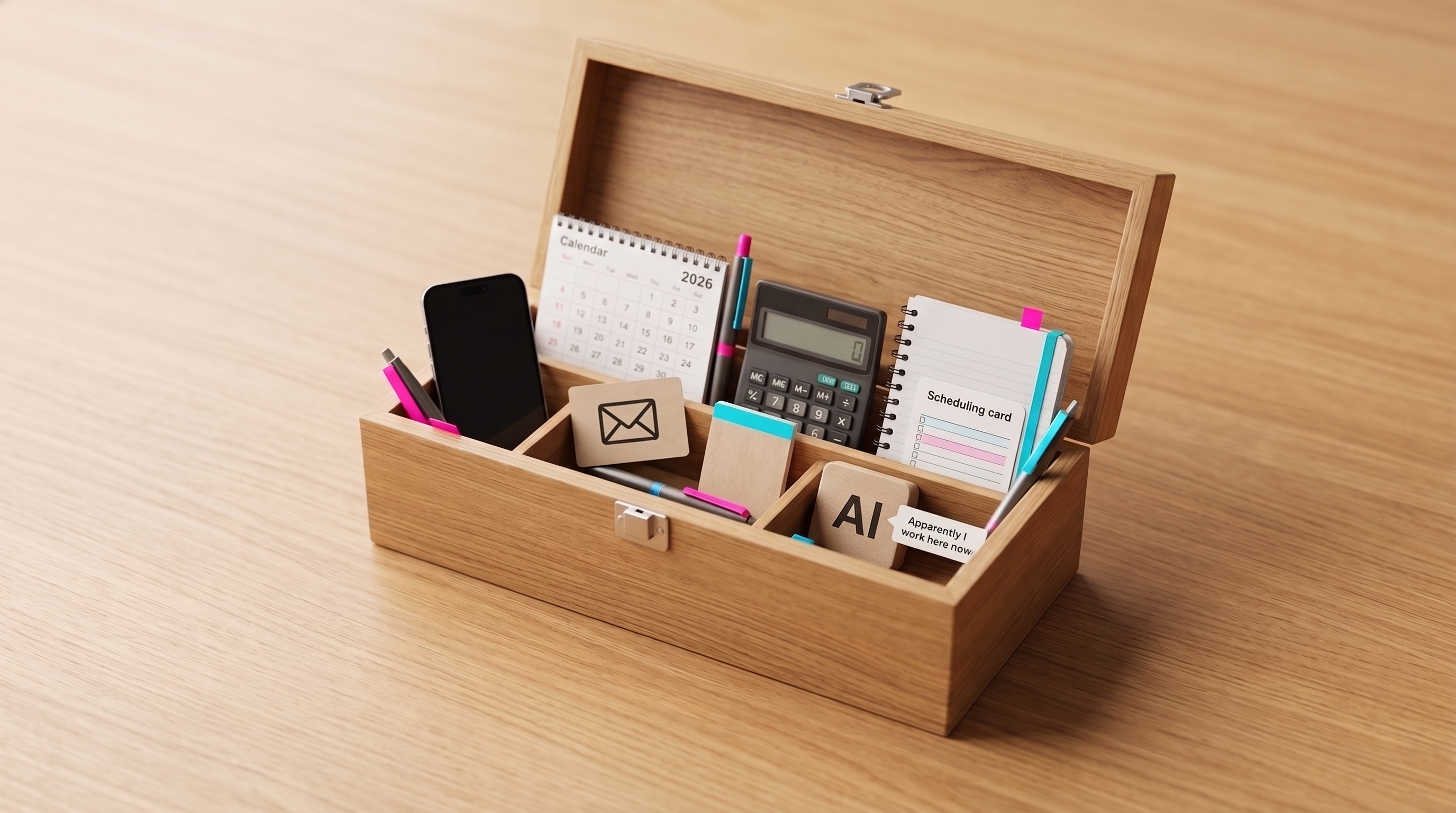
Doris is the front desk layer: fast response, clean lead capture, consistent follow-up. That's the job.
For most NZ businesses, the easiest starting point is Message Desk — because even if you never answer a call, you can still catch the enquiry and move it forward. If missed calls are your biggest revenue leak and you want them handled too, that's Receptionist — with a very practical reality built in: voice can depend on telco layers, so there are fallbacks to make sure the enquiry is still captured via missed-call text-back and messaging.
The point is reliability over perfection.
The quiet mic-drop
People don't remember your brand voice when they're trying to book a job.
They remember whether you made it easy. Whether you replied. Whether they felt looked after.
Consistency is personal because it tells customers exactly where they stand. And in 2026, where they stand is the difference between a booked job and someone trying the next name on Google.
Ready to let Doris handle your front desk?
She answers calls, replies to messages, captures enquiries and follows up automatically.